The discussions reflect strong agreement with the research, citing examples such as liking fictional villains who are similar to oneself, and referencing multiple experiments and prominent scholars like Rebecca Krause, which underscore the importance and relevance of the topic. The tone is analytical and curious, with words like 'prefer,' 'attracted,' and 'demonstrated,' highlighting both interest and engagement with the scientific findings.
AgreementStrong agreement
Most posts support the ideas presented, emphasizing that people are naturally attracted to villains who resemble themselves, which aligns with the article's findings.
InterestHigh interest
The discussions show high curiosity, referencing multiple lab experiments, prominent researchers, and the psychological concepts involved.
EngagementHigh engagement
Posts delve into implications, citing specific studies and examples, including parallels with fictional characters like Voldemort and Vader, indicating deep engagement.
ImpactModerate impact
While the posts highlight the fascinating nature of these findings, the overall impact appears more academic and theoretical rather than immediately transformative outside scholarly circles.
Abstract in brief
The article explores the idea that people are often attracted to darker versions of themselves, such as villains, because similarities to these negative characters make individuals feel more relevant and connected, even if those characters are morally bad.
Using large-scale data from over 232,000 users and five lab experiments, the research shows that people tend to prefer individuals like villains who are similar to them, challenging the common belief that negative comparisons are always avoided.
The findings suggest that under certain conditions, similarity to negative or immoral others can actually increase attraction, illuminating why people might be drawn to darker aspects of their own personality or to negative figures in society.]
The Hyde inside: People are attracted to fictitious characters that reflect a darker version of themselves. https://t.co/hZpOtVCF9Y https://t.co/MtGd9Kdajg https://t.co/7x3Q0Qrx61
De Voldemort a Vader. Contrario a lo que esperaban (5 experimentos, N=1685), preferimos aquellos villanos de fantasía que se parecen a nosotros mismos. Probablemente sea una forma de liberarnos, con la seguridad que supone la ficción (paper) https://t.co/uDsM6mwnoH (blog, abajo) https://t.co/IKSUsPqG8z https://t.co/MFAwFuXYMi
Can Bad Be Good? The Attraction of a Darker Self https://t.co/JVWe4dVk7E First academic paper to open with a Harry Potter quote? https://t.co/1OIqFGhtmJ
"people have preference for villains—unambiguously negative individuals—who are similar to themselves...Five subsequent lab experiments (N=1,685) demonstrated when and why similarity results in attraction toward—rather than repulsion from—negative others" https://t.co/QRb2UI5qZA https://t.co/hxoxy5jVwp
May 5, 2020 · 19 likes · 6 shares · 12,447 followersView post →
CD
Carlos Allende (Carlos Allende González, Ph.D.)
@damned_poet · X
@BettyBuckley @kurteichenwald In part. The Dunning-Kruger effect disappears when people become aware of how much they don't know. Self-verification theory explains Trump supporters' behavior much better. They see themselves validated.
https://t.co/Tj5xAPosXN
https://t.co/3Hmf8UCX7M
May 6, 2020 · 13 likes · 6 shares · 410 followersView post →
Sometimes we find ourselves falling for movie villains, which reveals much about our self-image and psychological preferences. This video explores why we may be drawn to these darker characters and what that says about…
This video explores why we identify with villains like the Joker and Darth Vader. Join Ken Fujioka and PhD scientist Altay de Souza as they discuss the psychological explanations behind our attraction to dark…
Resisting the dark dims the light.
"... #people have a preference for #villains—unambiguously #negative individuals—who are similar to themselves, which suggests that people are attracted to such comparisons in everyday #life."
#good #evil #relativism
https://t.co/KwdDPYyqSd
May 4, 2024 · 1 share · 1,247 followersView post →
GB
Gelecek Bilimde
@gelecekbilimde · X
May 4, 2024 · 2 likes · 1 share · 37,320 followersView post →
TM
The Academic Minute
@AcademicMinute · X
How do we view our shadow self without worrying about what it shows us?
Rebecca Krause-Galoni, assistant professor of marketing at @uiowa, says fiction can play a helpful role.
https://t.co/vdxaA1M2ne https://t.co/S6Uauzwax9
@tsukirunsu @GenshinOOC Krause, Rebecca J., and Derek D. Rucker. 2020. “Can Bad Be Good? The Attraction of a Darker Self.” Is a recent article about it. Basically people like fictional villains because show part of them that they wouldnt show in real life, but dont like real villains because, real XD
RT @BioTay: De Voldemort a Vader. Contrario a lo que esperaban (5 experimentos, N=1685), preferimos aquellos villanos de fantasía que se pa…
Mar 16, 2021 · 20 shares · 50 followersView post →
GS
Guille Sevilla
@Guille_Sevilla · X
RT @BioTay: De Voldemort a Vader. Contrario a lo que esperaban (5 experimentos, N=1685), preferimos aquellos villanos de fantasía que se pa…
Mar 16, 2021 · 20 shares · 320 followersView post →
VT
Víctor G Tagua
@Victagua · X
RT @BioTay: De Voldemort a Vader. Contrario a lo que esperaban (5 experimentos, N=1685), preferimos aquellos villanos de fantasía que se pa…
Mar 16, 2021 · 20 shares · 4,571 followersView post →
F
FER
@RURIAFE · X
RT @BioTay: De Voldemort a Vader. Contrario a lo que esperaban (5 experimentos, N=1685), preferimos aquellos villanos de fantasía que se pa…
Mar 16, 2021 · 20 shares · 40 followersView post →
N
neuropsych
@neuropsychfacts · X
People have a preference for "unambiguously negative individuals," like movie #villains, as long as they are similar to themselves.
People are drawn toward those who are similar to them despite negative characteristics; similarity signals self-relevance.
https://t.co/cWWBly8E3t
The academic article: https://t.co/Yo8mAhZJYc
And another interesting article by Rebecca Krause:
https://t.co/U06U6Iz3Of
"Coupling facts with stories can either enhance or undermine persuasion."
Good to see multiple studies testing the contexts for each of these, too!
自分と似ている人と自分を比べることは自己脅威になりえる。この自己脅威を取り除いてあげる(物語にする)と,自分と似た悪役を好む傾向が見られるようになるよという研究。/ Can Bad Be Good? The Attraction of a Darker Self https://t.co/gzwqL07ym2
RT @damned_poet: @BettyBuckley @kurteichenwald In part. The Dunning-Kruger effect disappears when people become aware of how much they don'…
May 6, 2020 · 6 shares · 50,983 followersView post →
CD
Carlos Allende (Carlos Allende González, Ph.D.)
@damned_poet · X
@BettyBuckley @kurteichenwald In part. The Dunning-Kruger effect disappears when people become aware of how much they don't know. Self-verification theory explains Trump supporters' behavior much better. They see themselves validated.
https://t.co/Tj5xAPosXN
https://t.co/3Hmf8UCX7M
May 6, 2020 · 13 likes · 6 shares · 410 followersView post →
May 6, 2020 · 7 likes · 1 share · 449 followersView post →
GF
Gilad Feldman
@giladfeldman · X
RT @PsychoSchmitt: "people have preference for villains—unambiguously negative individuals—who are similar to themselves...Five subsequent…
May 6, 2020 · 6 shares · 6,055 followersView post →
CS
Coltan Scrivner
@MorbidPsych · X
RT @PsychoSchmitt: "people have preference for villains—unambiguously negative individuals—who are similar to themselves...Five subsequent…
May 5, 2020 · 6 shares · 3,586 followersView post →
PL
Patrick Lockwood
@AlobhaPatrick · X
RT @PsychoSchmitt: "people have preference for villains—unambiguously negative individuals—who are similar to themselves...Five subsequent…
May 5, 2020 · 6 shares · 4,999 followersView post →
DS
David Schmitt
@PsychoSchmitt · X
"people have preference for villains—unambiguously negative individuals—who are similar to themselves...Five subsequent lab experiments (N=1,685) demonstrated when and why similarity results in attraction toward—rather than repulsion from—negative others" https://t.co/QRb2UI5qZA https://t.co/hxoxy5jVwp
May 5, 2020 · 19 likes · 6 shares · 12,447 followersView post →
De Voldemort a Vader. Contrario a lo que esperaban (5 experimentos, N=1685), preferimos aquellos villanos de fantasía que se parecen a nosotros mismos. Probablemente sea una forma de liberarnos, con la seguridad que supone la ficción (paper) https://t.co/uDsM6mwnoH (blog, abajo) https://t.co/IKSUsPqG8z https://t.co/MFAwFuXYMi
gösterdi. İnsanlar izledikleri veya okudukları karakterlerle benzerlikler paylaştıklarında kurgusal kötü karakterleri şaşırtıcı derecede sevimli bulabilirler.
Kaynak: https://t.co/dE1D0ks1d6
people have a preference for stories with villains—unambiguously negative individuals—who are similar to themselves
#SocSciResearch
https://t.co/mxj7z9v7HM
People like villains who resemble themselves. This could make for fun headlines and narratives, but this shouldn't be surprising as this is just a particular manifestation of people's general tendency to like people who are similar to themselves.
https://t.co/N04VQEVL55 https://t.co/XxLNcNCmRS
According to new research published this week in the journal Psychological Science, people may find fictional villains surprisingly likeable when they share similarities with the viewer or reader - https://t.co/IYHXtnfo2Z #wellbeing
A counter-intuitive paper in @PsychScience: "Using a large-scale proprietary data set from a company w/ >232,000 registered users, we demonstrated that people have a preference for villains—unambiguously negative individuals—who are similar to themselves" https://t.co/VJUNmch0GK
Can Bad Be Good? The Attraction of a Darker Self https://t.co/JVWe4dVk7E First academic paper to open with a Harry Potter quote? https://t.co/1OIqFGhtmJ
The Hyde inside: People are attracted to fictitious characters that reflect a darker version of themselves. https://t.co/hZpOtVCF9Y https://t.co/MtGd9Kdajg https://t.co/7x3Q0Qrx61
New psych. sci. article on morality: Without self-threat, people appear to be attracted to similar others even if they are villainous
I can't wait to get my hands on the full article!
https://t.co/4C4VuhMW8R
 RD
RD T
T N
N دا
دا DS
DS CD
CD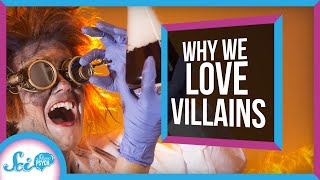

 XS
XS TG
TG BB
BB GB
GB TM
TM إ
إ A
A D
D VM
VM GS
GS VT
VT F
F N
N HH
HH DS
DS Ε
Ε M
M YM
YM 丸
丸 SG
SG TM
TM ST
ST B
B BB
BB 銀
銀 GF
GF CS
CS PL
PL す
す R
R MR
MR MD
MD FH
FH E
E MU
MU EL
EL C
C FB
FB TS
TS CG
CG A
A IE
IE JG
JG M
M MT
MT P
P UK
UK B
B ET
ET JS
JS MG
MG D
D B
B D
D SL
SL B
B EW
EW SC
SC JS
JS RP
RP L
L L
L IM
IM MN
MN A
A B
B AS
AS KF
KF Q
Q HS
HS Sシ
Sシ IT
IT G
G JS
JS S
S RR
RR S
S J
J F
F DP
DP