Several discussions highlight fascinating aspects of the research, such as the statement, 'fish that absorb more than 99.9% of the light,' which conveys a sense of wonderment about the extreme adaptations in deep-sea creatures. The use of phrases like 'wow' and 'biology never ceases to amaze' reflects an enthusiastic tone that emphasizes the impact of the findings. Additionally, discussions about the potential applications of this research in fields like camouflage and ecology further illustrate the high interest and engagement levels among users.
AgreementStrong agreement
The overwhelming majority of discussions indicate strong support for the findings and techniques described in the publication.
InterestHigh interest
There is a clear high level of curiosity about the camouflage strategies discussed, suggesting that the topic resonates well with the audience.
EngagementHigh engagement
Many participants delve into details of the research, discussing specific mechanisms such as the role of melanosomes in achieving ultra-black pigmentation.
ImpactHigh impact
Participants perceive the publication as having significant implications for understanding deep-sea biology and evolutionary adaptations.
Abstract in brief
At depths greater than 200 meters in the ocean, minimal sunlight exists, leading to bioluminescent organisms becoming crucial for visibility among predators and prey.
Bioluminescence reveals camouflage strategies like transparency and mirrored surfaces, which can be ineffective in bioluminescent light compared to darkness.
The evolution of ultra-black skin in deep-sea fish minimizes reflectance (less than 0.5%) through densely packed melanosomes, allowing these fish to remain undetectable to predators by significantly reducing visibility.
El artículo es “Ultra-black Camouflage in Deep-Sea Fishes”, Alexander L. Davis et al., Current Biology 30, 1-7, July 26, 2020, DOI 10.1016/j.cub.2020.06.044 https://t.co/Z71E5PG7F7
For anyone who hasn't seen, there's a very cool paper (not from us) on this apparently convergent pigmentation phenotype : https://t.co/l9P4e0Yvn9. Relies on layer of big, round, tightly packed melanosomes (m) under the epidermis (e), and apparently not in melanophores. https://t.co/Hy94JI3KyD https://t.co/COarn994sc
Jan 19, 2021 · 15 likes · 7 shares · 1,108 followersView post →
CA
Cheryl Lewis Ames
@boxjellytalk · X
Such a cool study by @OsbornLab and colleagues @NMNH and colleagues: Ultra-black Camouflage in Deep-Sea Fishes, aka "how to make yourself invisible"
https://t.co/G0Fu4qdb08
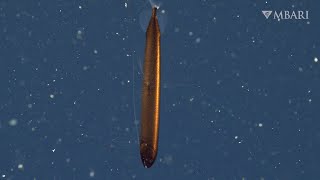
During a recent expedition aboard the Western Flyer, MBARI's team encountered the rare highfin dragonfish Bathophilus flemingi. At depths of 300 meters, these cunning predators rely on ultra-black camouflage and…
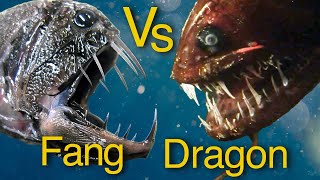
The fangtooth and the dragonfish are deep-sea predators seldom seen. This video explores their unique adaptations, including bioluminescence and camouflage strategies, revealing how these traits enable them to thrive in…
Deep-sea animals utilize remarkable adaptations to hide in the dark, with ultra-black camouflage being the most effective. This video explores how ultra-black fishes possess unique skin structures that trap and absorb…
At depths greater than 200 meters, minimal sunlight exists, making bioluminescent organisms vital for visibility. This video explores ultra-black camouflage in deep-sea fish, detailing how their evolved skin reduces…
This video explores the extraordinary adaptations of dragonfishes, skilled predators lurking in the depths of the ocean. Observed off Monterey Bay, one rare species exhibits ultra-black camouflage, minimizing…
info sources:
Davis et al. (2020). Ultra-black Camouflage in Deep-Sea Fishes. Current Biology https://t.co/SfthbzaxNX
How some superblack fish disappear into the darkness of the deep sea (2020) https://t.co/oDPadFow9O
Carmichael (2019). Micros Today https://t.co/OcjeA9bId7
We had two winners during the AGM:
Paper of the Year: @AlexLDavis_ et al. for their work on ultra-black camouflage in #deepsea fishes
https://t.co/5bHnQpE1Mm
#PhD thesis paper: @coralnerd for their work on benthic megafauna on N Pacific Seamounts https://t.co/5yYgcvnoJL https://t.co/Nx4MxrZWv9
RT @parichylab: For anyone who hasn't seen, there's a very cool paper (not from us) on this apparently convergent pigmentation phenotype :…
Jan 28, 2021 · 7 shares · 139 followersView post →
CB
Chiara Benvenuto
@cbenvenuto73 · X
RT @parichylab: For anyone who hasn't seen, there's a very cool paper (not from us) on this apparently convergent pigmentation phenotype :…
Jan 19, 2021 · 7 shares · 2,396 followersView post →
RC
Richard_Carr
@EmuLarge · X
RT @parichylab: For anyone who hasn't seen, there's a very cool paper (not from us) on this apparently convergent pigmentation phenotype :…
Jan 19, 2021 · 7 shares · 1,848 followersView post →
JD
John P. Friel, Ph.D.
@friel · X
RT @parichylab: For anyone who hasn't seen, there's a very cool paper (not from us) on this apparently convergent pigmentation phenotype :…
Jan 19, 2021 · 7 shares · 7,685 followersView post →
P
PASPCR
@PASPCR1 · X
RT @parichylab: For anyone who hasn't seen, there's a very cool paper (not from us) on this apparently convergent pigmentation phenotype :…
Jan 19, 2021 · 7 shares · 268 followersView post →
TN
Thomas Near
@TJNear · X
RT @parichylab: For anyone who hasn't seen, there's a very cool paper (not from us) on this apparently convergent pigmentation phenotype :…
Jan 19, 2021 · 7 shares · 3,357 followersView post →
DW
Dr. Jacqueline Webb
@JacquelineFWebb · X
RT @parichylab: For anyone who hasn't seen, there's a very cool paper (not from us) on this apparently convergent pigmentation phenotype :…
Jan 19, 2021 · 7 shares · 712 followersView post →
PS
@parichylab.bsky.social
@parichylab · X
For anyone who hasn't seen, there's a very cool paper (not from us) on this apparently convergent pigmentation phenotype : https://t.co/l9P4e0Yvn9. Relies on layer of big, round, tightly packed melanosomes (m) under the epidermis (e), and apparently not in melanophores. https://t.co/Hy94JI3KyD https://t.co/COarn994sc
Jan 19, 2021 · 15 likes · 7 shares · 1,108 followersView post →
NE
nanosat. the dawn of a new era
@NanoSpacecrafts · X
RT @NanoSpacecrafts: Ultra-black Camouflage in Deep-Sea Fishes
https://t.co/ohb4LwrUxp
Dec 8, 2020 · 1 share · 2,926 followersView post →
NE
nanosat. the dawn of a new era
@NanoSpacecrafts · X
Ultra-black Camouflage in Deep-Sea Fishes
https://t.co/ohb4LwrUxp
Dec 8, 2020 · 1 like · 1 share · 2,926 followersView post →
SM
Science at the Natural History Museum
@NHM_Science · X
Ultrablack - how deep sea fish avoid reflecting bioluminescent light @katiethomas10 @NHM_London & al https://t.co/S5OEmaGIqw
Oct 21, 2020 · 4 likes · 10,089 followersView post →
A
AnonRere
@AnonRere · X
Ultra-black Camouflage in Deep-Sea Fishes https://t.co/GbEiGkSvtj #biology #cell
El artículo es “Ultra-black Camouflage in Deep-Sea Fishes”, Alexander L. Davis et al., Current Biology 30, 1-7, July 26, 2020, DOI 10.1016/j.cub.2020.06.044 https://t.co/Z71E5PG7F7
Such a cool study by @OsbornLab and colleagues @NMNH and colleagues: Ultra-black Camouflage in Deep-Sea Fishes, aka "how to make yourself invisible"
https://t.co/G0Fu4qdb08
Φωτογραφήθηκαν για πρώτη φορά τα πιο #σκοτεινά πλάσματα του κόσμου
#ψάρια #δέρμα #μαύρα #χρωστική #απόχρωση #επιστήμονες
Η επιστημονική δημοσίευση: Davis et al., Ultra-black Camouflage in Deep-Sea Fishes, Current Biology (2020), https://t.co/THAfWm32uu
https://t.co/kLxFay9iOR
El NYT publica este bello artículo basado en otro gran artículo de Current Biology que se publicará en Septiembre ! wow ¡
Current Biology 30, 1–7, September 7, 2020
https://t.co/2ep9Ci2k7f
The blackest black is found in the deep sea.
#biology #colours #colors #color #zoology #ecology #evolution #nature #ocean #fish
Source.
Ultra-black Camouflage in Deep-Sea Fishes - ScienceDirect https://t.co/UX30ozdqA6
Interesting read on how some deep sea fish have ultra dark camouflage that absorbes +99% of light — not even bioluminescence of other fish can illuminate them
#science #tech #nature #environment
https://t.co/oLBIsC5X9L
Jul 16, 2020 · 1 like · 1,502 followersView post →
DJ
Daniel S. Joyce
@Daniel_S_Joyce · X
Melanosomes in the skin of 16 species of "ultrablack" deep sea fish absorb >99.5% of light and reduce sighting distance 6-fold compared to 98% absorbance. Independent evolution of countermeasure to bioluminescence
https://t.co/OJuWljZEJx
#fisharefriends https://t.co/p0yf5wUl5T
How #Ultra-#Black #Fish Disappear in the #Deepest #Seas
"Researchers have found fish that absorb more than 99.9% of the #light that hits their #skin."
Davis et al., Ultra-black Camouflage in Deep-Sea Fishes, Current Biology (2020), https://t.co/THAfWm32uu
https://t.co/r6AgdfIMPx
Jul 16, 2020 · 1 like · 1 share · 305 followersView post →
M
Mario
@L_ssar · X
Peces abisales que reflejan sólo el 0,044% de la luz (λ=480nm)
Puede servir para telescopios, camuflaje, etc. ¡La Biología! CC @pcoffeebreak