The discussions reflect a balanced view, with comments like 'neutrophils can still polarize,' showing agreement, and phrases like 'weaker adhesion' indicating interest. The tone varies from curiosity about cellular mechanisms to considerations of broader immune functions, demonstrating moderate engagement and recognition of potential impact.
AgreementModerate agreement
Most discussions acknowledge the findings, with some expressing curiosity about the physiological implications.
InterestModerate interest
Participants show moderate interest, referencing the specifics of neutrophil behavior and adhesion mechanisms.
EngagementModerate engagement
Comments include reflections on research methods and potential clinical relevance, indicating meaningful engagement.
ImpactModerate impact
Many see these findings as having a tangible impact on understanding immune response and potentially guiding therapies.
Abstract in brief
Neutrophils lacking ERM proteins can still polarize and move in response to chemokines, but have weaker adhesion, with moesin playing a key role in strengthening integrin signaling and adhesion.
Despite the absence of ERMs, proteins like PSGL1 and CD44 still move to the uropods during neutrophil polarization, indicating ERMs are not essential for this redistribution.
In vivo, neutrophils without ERMs can crawl toward chemotactic signals but tend to detach prematurely and show impaired migration into inflamed tissues, highlighting moesin's role in stable adhesion during immune responses.]
Neutrophils lacking ERM proteins polarize and crawl directionally but have decreased adhesion strength https://t.co/WOElogtm7H https://t.co/kBktWc7gNM
Aug 12, 2020 · 5 likes · 1 share · 32,367 followersView post →
AE
Ariakas Enoreth
@Aenoreth · X
Neutrophils lacking ERM proteins polarize and crawl directionally but have decreased adhesion strength | Blood Advances | American Society of Hematology https://t.co/E2n4eZfuDf
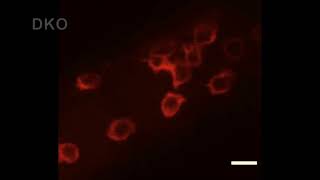
In vivo chemotaxis of wild-type and mutant neutrophils towards chemokine sources in mouse tissue, highlighting their ability to polarize and crawl while revealing the role of ERM proteins, especially moesin, in adhesion…
In vivo polarization of Mac1 in crawling neutrophils within mouse cremaster muscle venules, highlighting neutrophil response to chemokines and adhesion processes during immune responses.
Neutrophils polarize and crawl in vivo with reduced adhesion strength. Despite lacking ERM proteins, they still move response to chemokines, but exhibit weaker adhesion, highlighting moesin's role in stabilizing…
Neutrophils lacking ERM proteins polarize and crawl directionally but have decreased adhesion strength | Blood Advances | American Society of Hematology https://t.co/E2n4eZfuDf