 PC
PCPrebiotic Chemistry
@PrebioticChem · X
Universal motifs and the diversity of autocatalytic systems (Blokhuis & Nghe) https://t.co/b1feaEmWXt https://t.co/0ls3HfX03h
Oct 7, 2020 · 15 likes · 1 share · 1,225 followers
View post →
Mentions
Extended reach
Total likes
Video views
AI synopsis
Several discussions express agreement with the importance of identifying universal motifs in autocatalytic systems, and some emphasize how this framework may advance understanding of the origins of life, using words like 'key' and 'revolutionary,' which reflect mild enthusiasm and acknowledgment of its significance, while others simply share links or references without deep analysis.
Most discussions recognize the significance of the publication, with some expressing strong support for its insights into autocatalytic systems.
Participants show moderate curiosity, often highlighting the relevance to origins of life and chemical evolution but without deep technical engagement.
The posts include brief endorsements and citations, indicating some interaction, though not extensively elaborated or critically analyzed.
The discussions seem to acknowledge the article's potential to influence the field, suggesting its concepts could shape future research directions.
Universal motifs and the diversity of autocatalytic systems (Blokhuis & Nghe) https://t.co/b1feaEmWXt https://t.co/0ls3HfX03h
Universal motifs and the diversity of autocatalytic systems https://t.co/55aSzealFH
PNAS: Universal motifs and the diversity of autocatalytic systems [Applied Physical Sciences] https://t.co/Id2or18gKr
RT @ProfAbelMendez: Universal motifs and the diversity of autocatalytic systems https://t.co/8shsTbtO2C
Universal motifs and the diversity of autocatalytic systems | PNAS https://t.co/4tK8doB1R8
RT @PrebioticChem: Universal motifs and the diversity of autocatalytic systems (Blokhuis & Nghe) https://t.co/b1feaEmWXt https://t.co/0ls3H…
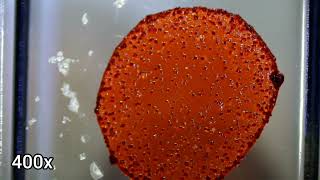
This video explores autocatalysis, a key process in chemical evolution and origins of life, focusing on basic principles, reaction motifs, and how kinetic and network factors influence autocatalytic network viability.
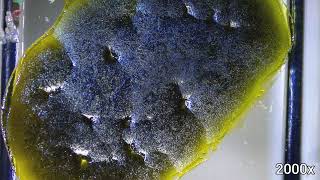

Autocatalysis, a process where a chemical reaction catalyzes itself, is central to chemical evolution and life's origins. This video explores its history, definitions, properties, and recent research directions…

Copper Cu and Mercury II Chloride HgCl2 are examined under the microscope. The video discusses solubility, deliquescent relative humidities, and standard electrode potentials relevant to these compounds, highlighting…

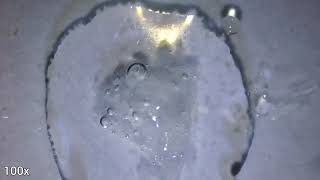
Mercury II Chloride HgCl2 and Sodium Hydroxide NaOH examined microscopically. The video details solubilities, relative humidities, and electrochemical potentials, providing insights into their chemical behaviors and…

Mercury II Chloride HgCl2 and Ammonia NH3 studied microscopically, exploring solubility, deliquescence, and electrochemical properties relevant to chemical evolution and autocatalytic systems.
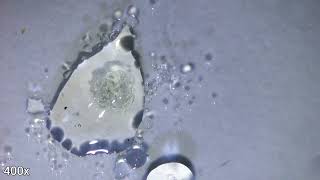
This video explores the properties and solubility of Dysprosium III Chloride DyCl3 and Mercury II Chloride HgCl2, along with their chemical equilibria, electrode potentials, and relevance in autocatalytic systems and…
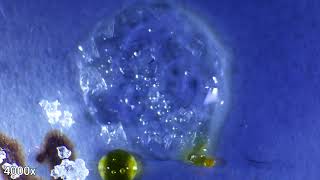
Ceric Ammonium Nitrate and Sodium Chloride are examined microscopically, focusing on their solubility, deliquescent properties, and electrochemical potentials. The video provides insights into their chemical behaviors…
Universal motifs and the diversity of autocatalytic systems | PNAS https://t.co/4tK8doB1R8
PNAS: Universal motifs and the diversity of autocatalytic systems [Applied Physical Sciences] https://t.co/Id2or18gKr
RT @PrebioticChem: Universal motifs and the diversity of autocatalytic systems (Blokhuis & Nghe) https://t.co/b1feaEmWXt https://t.co/0ls3H…
Universal motifs and the diversity of autocatalytic systems (Blokhuis & Nghe) https://t.co/b1feaEmWXt https://t.co/0ls3HfX03h
Universal motifs and the diversity of autocatalytic systems https://t.co/55aSzealFH
RT @ProfAbelMendez: Universal motifs and the diversity of autocatalytic systems https://t.co/8shsTbtO2C
 PM
PM NS
NS HL
HL DK
DK IP
IP