The overall tone indicates strong agreement and high interest, with comments highlighting the review's utility in clinical contexts, such as its discussion of knowledge gaps and decision tools, which demonstrate a meaningful but not revolutionary impact on medical imaging practices.
AgreementModerate agreement
Most discussions acknowledge the value of the review, especially recognizing its assistance in differentiating IPLNs, which many see as helpful for clinical decision-making.
InterestHigh interest
The posts demonstrate high interest, with commenters emphasizing the importance of accurate nodule classification and mentioning specific features like decision trees and knowledge gaps.
EngagementModerate engagement
The discussions go beyond surface-level reactions, referencing detailed aspects such as the variability in nodule definitions and the utility of decision trees, indicating a moderate depth of engagement.
ImpactModerate impact
The posts suggest that the review is viewed as having a meaningful impact on clinical practice by reducing unnecessary follow-ups and improving diagnostic confidence, though the overall tone remains informational rather than transformational.
Abstract in brief
Several studies have found that intrapulmonary lymph nodes (IPLNs) are benign lesions on CT scans that don't need follow-up after they're initially detected.
IPLNs are often misidentified as pulmonary nodules, and being able to accurately recognize them could help reduce unnecessary follow-up CT scans.
The review highlights the variability in defining and classifying these nodules and introduces a decision tree to assist clinicians in properly categorizing them.
A review article from @radiology_rsna: Cardiothoracic Imaging provides an overview of what is known about perifissural nodules, as well as knowledge gaps. https://t.co/D2ahUqy9fi @DIAGNijmegen #CardiothoracicImaging #ChestRad #CVRad #CTRad #PulmonaryImaging https://t.co/a7VQ1bS10v
A review published in @radiology_rsna: Cardiothoracic Imaging provides an overview of perifissural nodules, discusses knowledge gaps in defining PFNs and provides a decision tree to guide clinicians in classifying nodules as PFNs. https://t.co/bGz2fldFCl #PulmonaryImaging https://t.co/AY2o6SBDMJ
Nov 14, 2020 · 16 likes · 4 shares · 70,661 followersView post →
MN
Marcos Mestas Nuñez
@marcosmestas · X
https://t.co/kBuG2yqHtN
Feb 12, 2022 · 1 like · 1,868 followersView post →
AM
Aloha Meave MD
@AlohaMeaveMD · X
RT @RSNA: A review published in @radiology_rsna: Cardiothoracic Imaging provides an overview of perifissural nodules, discusses knowledge g…
Nov 14, 2020 · 4 shares · 4,081 followersView post →
LL
Love Your Lungs
@KingsResp · X
In an exam you need to be risk averse (maybe in life too?). You are not provided with enough information to be confident this is an IPLN. This review helps to show why. https://t.co/Zi9oFx79oa. 7/n #RespEd https://t.co/Rhp31KlAJd
#RT RSNA: A review published in @radiology_rsna: Cardiothoracic Imaging provides an overview of perifissural nodules, discusses knowledge gaps in defining PFNs and provides a decision tree to guide clinicians in classifying nodules as PFNs. https://t.co/dljUCyllB5 #PulmonaryIma…
This video discusses the benign nature of intrapulmonary lymph nodes detected on CT scans, emphasizing accurate identification to prevent unnecessary follow-ups. It highlights variability in classification and…
This episode discusses the CT features of intrapulmonary lymph nodes, highlighting their benign nature and importance in avoiding unnecessary follow-up scans. The review introduces a decision tree to aid accurate…
In an exam you need to be risk averse (maybe in life too?). You are not provided with enough information to be confident this is an IPLN. This review helps to show why. https://t.co/Zi9oFx79oa. 7/n #RespEd https://t.co/Rhp31KlAJd
RT @RSNA: A review published in @radiology_rsna: Cardiothoracic Imaging provides an overview of perifissural nodules, discusses knowledge g…
Nov 14, 2020 · 4 shares · 4,081 followersView post →
BW
Brian Wells
@bwells80 · X
#RT RSNA: A review published in @radiology_rsna: Cardiothoracic Imaging provides an overview of perifissural nodules, discusses knowledge gaps in defining PFNs and provides a decision tree to guide clinicians in classifying nodules as PFNs. https://t.co/dljUCyllB5 #PulmonaryIma…
A review published in @radiology_rsna: Cardiothoracic Imaging provides an overview of perifissural nodules, discusses knowledge gaps in defining PFNs and provides a decision tree to guide clinicians in classifying nodules as PFNs. https://t.co/bGz2fldFCl #PulmonaryImaging https://t.co/AY2o6SBDMJ
Nov 14, 2020 · 16 likes · 4 shares · 70,661 followersView post →
DN
DIAG Nijmegen
@DIAGNijmegen · X
RT @radiology_rsna: A review article from @radiology_rsna: Cardiothoracic Imaging provides an overview of what is known about perifissural…
A review article from @radiology_rsna: Cardiothoracic Imaging provides an overview of what is known about perifissural nodules, as well as knowledge gaps. https://t.co/D2ahUqy9fi @DIAGNijmegen #CardiothoracicImaging #ChestRad #CVRad #CTRad #PulmonaryImaging https://t.co/a7VQ1bS10v
 R
R R
R MN
MN AM
AM LL
LL BW
BW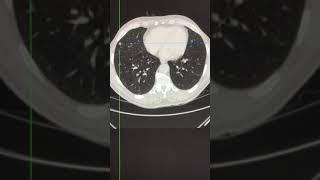

 AS
AS DR
DR DN
DN JM
JM