Discussions frequently highlight pivotal points from the article, such as the complexity of defining emotions across species and the moral ramifications of recognizing animal sentience. For example, users reference Charles Darwin’s observations on animal emotions as well as contemporary claims that emotional understanding can lead to a broader 'circle of compassion.' Words like 'tipping point' and phrases about moral consequences demonstrate the urgency and seriousness of the topic, contributing to the overall perception that this research is crucial for evolving ethical standards.
AgreementModerate agreement
A majority of discussions reflect a supportive stance toward the article's premise regarding animal emotions.
InterestHigh interest
The discussions indicate a high level of curiosity and relevance to contemporary ethical debates.
EngagementHigh engagement
Several posts reference specific scientific ideas and ethical implications, highlighting a deep exploration of the topic.
ImpactHigh impact
Many contributors believe this research will significantly influence how society views and treats animals.
Abstract in brief
The text explores whether animals, including invertebrates, experience felt emotions similar to humans.
It discusses the implications of animal emotions on moral considerations and how humans should treat animals based on their emotional capacities.
The overall question raised is whether recognizing animal emotions can change our ethical responsibilities toward them.
I'd like to call out three books that I recommended in my recent Guardian article on the question of animal emotions (https://t.co/07Z9eaizzj). "Metazoa" by @PGodfreySmith, "An Immense World" by @EdYong209, and "Between Us" by @BatjaMesquita. All are great reads.
Aug 30, 2022 · 106 likes · 11 shares · 44,362 followersView post →
MM
Melanie Mitchell
@MelMitchell1 · X
Shocking fact: Until 1980s, the medical community's official stance: newborn babies don't experience pain, & surgery on them was done w/o anesthesia.
Will current views on animals' capacity for pain similarly shock our descendants?
Important article: https://t.co/4nLZVqGzoJ
Mar 25, 2022 · 34 likes · 8 shares · 48,875 followersView post →
SM
Science Magazine
@ScienceMagazine · X
"With an increasing number of species whose emotional states have moral standing, what follows about how exactly we should treat them? Here there remain more questions than answers." https://t.co/FErjvAQ2UN #SciencePerspective https://t.co/kZDnjluJB1
Mar 28, 2022 · 32 likes · 9 shares · 4,530,898 followersView post →
SM
Science Magazine
@ScienceMagazine · X
"With an increasing number of species whose emotional states have moral standing, what follows about how exactly we should treat them? Here there remain more questions than answers." https://t.co/FErjvAQ2UN #SciencePerspective https://t.co/YvfDaAEs6c
Mar 30, 2022 · 27 likes · 14 shares · 4,530,898 followersView post →
CS
Carl Safina
@carlsafina · X
The more we learn about animal emotions, the more species we include in our circle of compassion.
https://t.co/GWh4d6M9ru
Aug 8, 2022 · 10 likes · 4 shares · 19,654 followersView post →
C
CrustaceanCompassion
@crab_welfare · X
New scientific paper “The question of animal emotions” reflects how humans perceive and respond to animal pain. They conclude we've reached a time where we can no longer treat invertebrate animals like crabs and lobsters as though they feel no pain
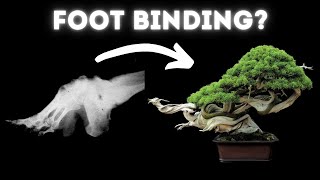
Is it possible to torture a bonsai tree? This video explores the evolution of pain and the ethical considerations surrounding bonsai cultivation. It argues that plants do not experience pain in the same way animals do…
Explore the biology of pain in relation to bonsai cultivation. Is bonsai a form of torture or an artistic expression? This video delves into research on plant perception of pain and how it affects our understanding of…
With dogs, one obviously has to consider the use of scent, and how remarkably intelligent many dogs can be. But ultimately, the richest puzzle is the question of animal emotions.
@VicenteSG32 @AcaymoOnFire @trotamundi2 @SoyJosematc13 @PabloBcs14 Si no te permite verlo porque es de pago puedes usar Sci-Hub, aunque se que no te lo vas a leer, ni por asomo. https://t.co/B7cvca7KwG - DOI: 10.1126/science.abo2378
The question of animal emotions https://t.co/2lkeVpggEb
Feb 23, 2023 · 2 likes · 1 share · 390 followersView post →
EC
EntomoNews Bernadette Cassel
@collemyria · X
En 1872, dans The Expression of the Emotions in Man and Animals, Charles Darwin écrivait: « Même les insectes expriment la colère, la terreur, la jalousie et l'amour.» | Slate https://t.co/y3Vsyw6b0I
The question of animal emotions | Science (2022)
RT @LFeldmanBarrett: I'd like to call out three books that I recommended in my recent Guardian article on the question of animal emotions (…
Dec 23, 2022 · 11 shares · 12 followersView post →
CP
CHAP – Center for Human Animal Psychology
@CHAP_AAU · X
Det lyder af forældede antagelser. Her er lidt naturvidenskabeligt belæg til opdateringshjælp. Kan nogen få det videre til svinebranchen og ministeren?
https://t.co/nVycd4fjCF
https://t.co/vsZDgv0CTj
https://t.co/gL2h2OEk1W
https://t.co/TTXnEuKjm9 https://t.co/XEnC0y8z2J
'Moving from mood to emotion is trickier because the question of animal emotions depends on how you define “emotion” in the first place.' https://t.co/iSfVKelETM #Mentalhealth #Therapy #Mindfulness #Psychology
RT @LFeldmanBarrett: I'd like to call out three books that I recommended in my recent Guardian article on the question of animal emotions (…
Aug 31, 2022 · 11 shares · 62 followersView post →
PN
Patrick Onghena (@PatrickOnghena@mastodon.nl)
@PatrickOnghena · X
RT @LFeldmanBarrett: I'd like to call out three books that I recommended in my recent Guardian article on the question of animal emotions (…
Aug 31, 2022 · 11 shares · 1,189 followersView post →
DG
Dr Pérez-González
@dr_jcpg · X
RT @LFeldmanBarrett: I'd like to call out three books that I recommended in my recent Guardian article on the question of animal emotions (…
Aug 30, 2022 · 11 shares · 1,267 followersView post →
E
Eddphaedo
@eddussa · X
RT @LFeldmanBarrett: I'd like to call out three books that I recommended in my recent Guardian article on the question of animal emotions (…
Aug 30, 2022 · 11 shares · 19 followersView post →
BM
Batja Mesquita
@BatjaMesquita · X
RT @LFeldmanBarrett: I'd like to call out three books that I recommended in my recent Guardian article on the question of animal emotions (…
Aug 30, 2022 · 11 shares · 1,150 followersView post →
FS
Freddy Krueger's Daycare on Elm Street
@RobFlor_ · X
RT @LFeldmanBarrett: I'd like to call out three books that I recommended in my recent Guardian article on the question of animal emotions (…
Aug 30, 2022 · 11 shares · 927 followersView post →
LB
Lisa Feldman Barrett
@LFeldmanBarrett · X
I'd like to call out three books that I recommended in my recent Guardian article on the question of animal emotions (https://t.co/07Z9eaizzj). "Metazoa" by @PGodfreySmith, "An Immense World" by @EdYong209, and "Between Us" by @BatjaMesquita. All are great reads.
Aug 30, 2022 · 106 likes · 11 shares · 44,362 followersView post →
FA
Frode Alexander
@FedorAlexander_ · X
@MariasFregner Den holdning er faktisk ved at være passé blandt forskere, selv hvad angår ikke-hvirveldyr:
https://t.co/jRstQGd1I9 https://t.co/Coy6WIgGZ9
Tom Froese, Embodied Cognitive Science Unit (ECSU)
@DrTomFroese · X
If the enactive approach to life-mind continuity is on the right track, moral consequences are hard to avoid. “Invertebrate experiences will need to become part of our species’ moral landscape.” https://t.co/fygPbWOvMr
The question of animal emotions: "This topic has been heavily debated in both affective neuroscience (how to define an emotion?) & philosophy (what is the moral relevance of animal experiences?), but a consensus on animal sentience seems to be emerging" https://t.co/FkgIdKWYb1
An age-old question about invertebrates and whether they feel emotions. The question is still framed around whether they feel pain though, and a focus on "higher" invertebrates. https://t.co/t5d10DUOrL
New scientific paper “The question of animal emotions” reflects how humans perceive and respond to animal pain. They conclude we've reached a time where we can no longer treat invertebrate animals like crabs and lobsters as though they feel no pain
"(There) is evidence that emotions and felt experiences (i.e., sentience) are not limited to animals close to humans, such as the mammals."
https://t.co/PCtvtRe1wh
Reviewing the latest behavioral tools to evaluate animal sentience & emotional responses, the researchers suggest compassion for the experience of invertebrates like lobsters, clams & crabs may become part of the human moral landscape.
2/
@KristinAndrewz
https://t.co/UWpwcwu4vk
RT @ScienceMagazine: "With an increasing number of species whose emotional states have moral standing, what follows about how exactly we sh…
Mar 31, 2022 · 14 shares · 22 followersView post →
JM
Jason Mullikin
@jason_mullikin · X
RT @ScienceMagazine: "With an increasing number of species whose emotional states have moral standing, what follows about how exactly we sh…
Mar 31, 2022 · 14 shares · 120 followersView post →
X
xxy
@xxy07255392 · X
RT @ScienceMagazine: "With an increasing number of species whose emotional states have moral standing, what follows about how exactly we sh…
Mar 31, 2022 · 14 shares · 264 followersView post →
TL
The Science Library
@UPCSLibrary · X
RT @ScienceMagazine: "With an increasing number of species whose emotional states have moral standing, what follows about how exactly we sh…
Mar 30, 2022 · 14 shares · 551 followersView post →
P
Pisigomet
@pisigomet · X
RT @ScienceMagazine: "With an increasing number of species whose emotional states have moral standing, what follows about how exactly we sh…
Mar 30, 2022 · 14 shares · 289 followersView post →
VH
Valerie Harvey
@oldval2 · X
RT @ScienceMagazine: "With an increasing number of species whose emotional states have moral standing, what follows about how exactly we sh…
Mar 30, 2022 · 14 shares · 3,524 followersView post →
BA
Badruddin Ansari
@Badruddin248 · X
RT @ScienceMagazine: "With an increasing number of species whose emotional states have moral standing, what follows about how exactly we sh…
Mar 30, 2022 · 14 shares · 18 followersView post →
V
VirginSlayerIncelius
@VIncelius · X
ScienceMagazine: "With an increasing number of species whose emotional states have moral standing, what follows about how exactly we should treat them? Here there remain more questions than answers." https://t.co/UepfVBojdc #SciencePerspective https://t.co/qnJoAY0m7N
RT @ScienceMagazine: "With an increasing number of species whose emotional states have moral standing, what follows about how exactly we sh…
Mar 30, 2022 · 14 shares · 27 followersView post →
JV
Jennifer Vivian
@jenLvivian · X
RT @ScienceMagazine: "With an increasing number of species whose emotional states have moral standing, what follows about how exactly we sh…
Mar 30, 2022 · 14 shares · 140 followersView post →
SM
Science Magazine
@ScienceMagazine · X
"With an increasing number of species whose emotional states have moral standing, what follows about how exactly we should treat them? Here there remain more questions than answers." https://t.co/FErjvAQ2UN #SciencePerspective https://t.co/YvfDaAEs6c
Mar 30, 2022 · 27 likes · 14 shares · 4,530,898 followersView post →
AP
Almudena Pérez
@cientifidor · X
Referencias:
Frans B. M. de Waal y Kristin Andrews. “The question of animal emotions” Science
https://t.co/IXOkZ60xdh
The question of animal emotions https://t.co/sUYw17aRzt
Mar 29, 2022 · 1 like · 1,006 followersView post →
JS
Julia Self
@JuliaLSelf · X
“it seems appropriate to adopt a stance of consistency and evolutionary parsimony such that similar emotional expressions and processes in related species call for similar psychological descriptions when it comes to sentience.”
https://t.co/HzlUg9RWyd
RT @ScienceMagazine: "With an increasing number of species whose emotional states have moral standing, what follows about how exactly we sh…
Mar 28, 2022 · 9 shares · 385 followersView post →
V
VirginSlayerIncelius
@VIncelius · X
ScienceMagazine: "With an increasing number of species whose emotional states have moral standing, what follows about how exactly we should treat them? Here there remain more questions than answers." https://t.co/UepfVBojdc #SciencePerspective https://t.co/ykKHxlYaH8
RT @ScienceMagazine: "With an increasing number of species whose emotional states have moral standing, what follows about how exactly we sh…
Mar 28, 2022 · 9 shares · 745 followersView post →
AG
anil goel
@1967Anil · X
RT @ScienceMagazine: "With an increasing number of species whose emotional states have moral standing, what follows about how exactly we sh…
Mar 28, 2022 · 9 shares · 2,904 followersView post →
GC
Giles Crouch, PhD c
@DigitalSapience · X
RT @ScienceMagazine: "With an increasing number of species whose emotional states have moral standing, what follows about how exactly we sh…
Mar 28, 2022 · 9 shares · 3,352 followersView post →
SM
Science Magazine
@ScienceMagazine · X
"With an increasing number of species whose emotional states have moral standing, what follows about how exactly we should treat them? Here there remain more questions than answers." https://t.co/FErjvAQ2UN #SciencePerspective https://t.co/kZDnjluJB1
Mar 28, 2022 · 32 likes · 9 shares · 4,530,898 followersView post →
LR
Luis F. Rojo
@lfrojo · X
Estamos muy preocupados por el sufrimiento de los Bogavantes y nos toca un pie el sufrimiento de miles de seres humanos.
https://t.co/LKVUxG4NXh https://t.co/mw9xVFplv9
RT @MelMitchell1: Shocking fact: Until 1980s, the medical community's official stance: newborn babies don't experience pain, & surgery on t…
Mar 27, 2022 · 8 shares · 179 followersView post →
AP
Arturo_P
@Arturo_P · X
RT @MelMitchell1: Shocking fact: Until 1980s, the medical community's official stance: newborn babies don't experience pain, & surgery on t…
Mar 27, 2022 · 8 shares · 1,951 followersView post →
LP
Luiz Pessoa
@PessoaBrain · X
RT @MelMitchell1: Shocking fact: Until 1980s, the medical community's official stance: newborn babies don't experience pain, & surgery on t…
Mar 27, 2022 · 8 shares · 45,492 followersView post →
TW
Thalia Wheatley
@ThaliaWheatley · X
RT @MelMitchell1: Shocking fact: Until 1980s, the medical community's official stance: newborn babies don't experience pain, & surgery on t…
Mar 27, 2022 · 8 shares · 4,794 followersView post →
AS
Arne Elofsson @arneelof.bsky.social
@arneelof · X
The key question is how do you kill your lobsters. I have started killing them by putting a knife in their head before cooking them instead of boiling them alive. What do you do ?
The question of animal emotions https://t.co/z1vg9Oi2Uo
"the evidence was so overwhelming that physicians could no longer act as if infants are immune to pain. A similar point is being reached where invertebrates can no longer be treated as if they only have a nociceptive response to harmful stimuli." #ethics https://t.co/6d9qbOMViL
Mar 25, 2022 · 2 likes · 1,666 followersView post →
A
Auralee
@leelinska · X
RT @MelMitchell1: Shocking fact: Until 1980s, the medical community's official stance: newborn babies don't experience pain, & surgery on t…
Mar 25, 2022 · 8 shares · 236 followersView post →
TJ
Thomas R. Holtz, Jr.
@TomHoltzPaleo · X
The question of animal emotions https://t.co/azffB3QIfJ
Mar 25, 2022 · 4 likes · 1 share · 31,846 followersView post →
DC
Dongil Chung
@dongilchung · X
RT @KristinAndrewz: First Science article! Frans de Waal and I argue we’re at a tipping point in animal emotions-it’s time to flip the null…
Mar 25, 2022 · 87 shares · 386 followersView post →
MP
Martin Porr
@martinporr · X
RT @KristinAndrewz: First Science article! Frans de Waal and I argue we’re at a tipping point in animal emotions-it’s time to flip the null…
Mar 25, 2022 · 87 shares · 1,520 followersView post →
MC
Matteo C. M. Casiraghi
@MatteoCasiragh3 · X
RT @KristinAndrewz: First Science article! Frans de Waal and I argue we’re at a tipping point in animal emotions-it’s time to flip the null…
Mar 25, 2022 · 87 shares · 425 followersView post →
S
Sofia
@SoGreenWashed · X
RT @KristinAndrewz: First Science article! Frans de Waal and I argue we’re at a tipping point in animal emotions-it’s time to flip the null…
Mar 25, 2022 · 87 shares · 220 followersView post →
AP
Ali Parsai
@AlParsai · X
RT @MelMitchell1: Shocking fact: Until 1980s, the medical community's official stance: newborn babies don't experience pain, & surgery on t…
Mar 25, 2022 · 8 shares · 382 followersView post →
SA
Shelley Alexander
@DanzingCoyote · X
RT @KristinAndrewz: First Science article! Frans de Waal and I argue we’re at a tipping point in animal emotions-it’s time to flip the null…
Mar 25, 2022 · 87 shares · 146 followersView post →
DJ
Dr. Siobhan Speiran seeks postdoc/job
@siobhanisa · X
RT @KristinAndrewz: First Science article! Frans de Waal and I argue we’re at a tipping point in animal emotions-it’s time to flip the null…
Mar 25, 2022 · 87 shares · 779 followersView post →
MM
Melanie Mitchell
@MelMitchell1 · X
Shocking fact: Until 1980s, the medical community's official stance: newborn babies don't experience pain, & surgery on them was done w/o anesthesia.
Will current views on animals' capacity for pain similarly shock our descendants?
Important article: https://t.co/4nLZVqGzoJ
Mar 25, 2022 · 34 likes · 8 shares · 48,875 followersView post →
SE
@scipak_es
@scipak_es · X
En un artículo de Perspective, de Waal y Andrews analizan las pruebas científicas que sugieren que los animales experimentan emociones tanto positivas como negativas y destacan el debate científico en torno a lo que constituye la sensibilidad animal... https://t.co/uHQNVvcVj0
Mar 25, 2022 · 2 likes · 1 share · 2,507 followersView post →
YI
York U Research & Innovation
@YUResearch · X
Do animals, including invertebrates, feel emotions, & does this morally matter? @YorkULAPS Prof @KristinAndrewz & Frans B. M. de Waal examine the question of animal emotions. Read their paper here. https://t.co/fbvj2PbY72 | #YUResearch https://t.co/m6jSo62cCI
The question of #Animal #emotions.
@ScienceMagazine @isciverse
This topic has been heavily debated in both affective neuroscience and philosophy, but a consensus on the criteria for and implications of recognizing animal sentience seems to be emerging.
https://t.co/Nw9I6qOF0g
Mar 25, 2022 · 3 likes · 40,408 followersView post →
The question of animal emotions https://t.co/liuKLTREdj
An important contribution that raises many hard questions but the approach seems to need metrics if it is to be broadly accepted. How does one compare the emotions of an insect and a hominid?
RT @aregenberg: "With an increasing number of species whose emotional states have moral standing, what follows about how exactly we should…
Mar 24, 2022 · 1 share · 11,035 followersView post →
AR
Alan Regenberg
@aregenberg · X
"With an increasing number of species whose emotional states have moral standing, what follows about how exactly we should treat them?" - The question of animal emotions https://t.co/InU7G2DLbO
Mar 24, 2022 · 1 share · 2,788 followersView post →
ÉM
Éric Maeker
@DrMaeker · X
The question of animal emotions https://t.co/pH5wbGdHwl