Overall, comments reflect strong support and fascination with the novel insights into bacterial behavior in polymers, exemplified by phrases like 'thrilled,' 'fantastic research,' and references to implications for 'living gels' and 'biomedical' materials, which illustrate both interest and anticipated impact in related fields.
AgreementModerate agreement
Most discussions express enthusiasm and support for the findings, with some referencing the significance of bacterial cable formation in polymer environments.
InterestHigh interest
The discussions demonstrate a high level of interest, highlighting the relevance of the research for fields like biomedicine and materials science.
EngagementModerate engagement
Posts include references to supplemental videos, related research, and detailed summaries, showing active and meaningful engagement.
ImpactModerate impact
The discussions suggest that the article could have a notable influence on ongoing research and applications in engineered living materials and biological systems.
Abstract in brief
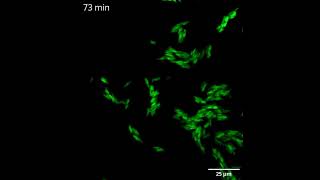
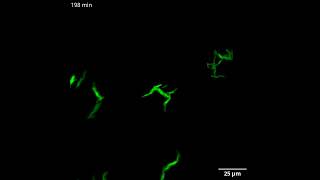
The study shows that bacteria in polymer-rich environments tend to form large, snake-like structures called cables during colony growth, a behavior not typically observed in polymer-free fluids.
Experiments combined with biophysical models reveal that these cables form because polymers cause neighboring bacteria to be attracted to each other (entropic attraction) and make it harder for cells to move apart due to the viscous nature of the environment.
These findings highlight the significant role polymers play in shaping bacterial colony development, which can influence how bacteria interact with hosts and their surroundings, providing insights into the physical principles of colony formation in complex environments.]
Thrilled to see this paper published @ScienceAdvances!
In it, we describe how growing bacterial colonies form metastable “living gels” in polymeric fluids.
Check it out at https://t.co/V1V3Kv0kXa!
A summary is at
https://t.co/O9GJDJZLUQ
as well as in the tweetorial below ⬇️ https://t.co/xNpDhLF7UT
Jan 17, 2025 · 121 likes · 25 shares · 5,298 followersView post →
K
Kim
@Kwells04Wells · X
Morphogenesis of bacterial cables in polymeric environments
“we found that nonmotile bacteria proliferating in sufficiently concentrated polymer solutions—both biological and synthetic—nematically align to form an intertwined network of long, serpentine, multicellular cables.” https://t.co/12PTxesrxD https://t.co/55yTjHq0Ui
2025-01-19 Issue of #engineeredlivingmaterials feed: biomed.news/bims-enlima/...
via @biomednews.bsky.social
Includes articles on bacterial cables in polymeric environments (h/t @sebasgonz29.bsky.social), cell-laden granular composites, and smart textiles.
Check the feed for excellent research!
Bacteria form large, snake-like cables during colony growth in polymer-rich environments, driven by entropic attraction and viscous limitations, impacting bacterial interactions and colony development in complex…
Bacteria form large, snake-like cable structures in polymer-rich environments due to entropic attraction and viscous forces, influencing colony development and interactions with hosts in complex settings.
Bacteria in polymer-rich environments tend to form large, snake-like structures called cables during colony growth. This behavior results from polymers causing bacteria to attract each other and hindering their movement…
This video explores how bacteria form large, snake-like cables in polymer-rich environments during colony growth, driven by entropic attraction and environmental viscosity, highlighting the influence of polymers on…
This video explores how bacteria form large, snake-like cables in polymer-rich settings, driven by entropic attraction and environmental viscosity, revealing insights into colony development in complex environments.
Bacteria form snake-like cables in polymer-rich environments during colony growth. Experiments and biophysical models reveal that polymers attract bacteria and hinder separation, influencing colony development and…
This study shows that bacteria in polymer-rich environments tend to form large, snake-like structures called cables during colony growth, a behavior not typically observed in polymer-free fluids. The findings highlight…
Bacteria form large, snake-like cables in polymer-rich environments, due to entropic attraction and viscous effects, influencing colony development and interactions with hosts in complex environments.
The study shows that bacteria in polymer-rich environments tend to form large, snake-like structures called cables during colony growth, a behavior not typically observed in polymer-free fluids. These findings highlight…
Morphogenesis of bacterial cables in polymeric environments
“we found that nonmotile bacteria proliferating in sufficiently concentrated polymer solutions—both biological and synthetic—nematically align to form an intertwined network of long, serpentine, multicellular cables.” https://t.co/12PTxesrxD https://t.co/55yTjHq0Ui
@Ryansikorski10 @crislerwyo Morphogenesis of bacterial cables in polymeric environments
“nonmotile bacteria proliferating in sufficiently concentrated polymer solutions—both biological and synthetic—nematically align to form an intertwined network of long, serpentine, multicellular cables.” https://t.co/G1t7g1pWTe
Morphogenesis of bacterial cables in polymeric environments https://t.co/XuYx64ced5
Jan 21, 2025 · 2 likes · 17,419 followersView post →
SL
Shyam Prabhakar Lab
@shyam_lab · X
RT @TheSquishyLab: Thrilled to see this paper published @ScienceAdvances!
In it, we describe how growing bacterial colonies form metastabl…
Jan 20, 2025 · 25 shares · 1,510 followersView post →
B
BaoLab
@HuanBao4 · X
RT @TheSquishyLab: Thrilled to see this paper published @ScienceAdvances!
In it, we describe how growing bacterial colonies form metastabl…
Jan 19, 2025 · 25 shares · 314 followersView post →
RK
Rahul K
@theresearch.bsky.social · Bluesky
2025-01-19 Issue of #engineeredlivingmaterials feed: biomed.news/bims-enlima/...
via @biomednews.bsky.social
Includes articles on bacterial cables in polymeric environments (h/t @sebasgonz29.bsky.social), cell-laden granular composites, and smart textiles.
Check the feed for excellent research!
RT @TheSquishyLab: Thrilled to see this paper published @ScienceAdvances!
In it, we describe how growing bacterial colonies form metastabl…
Jan 18, 2025 · 25 shares · 115 followersView post →
NS
Nelke 'Demon Lord' Shilovich
@nelke_IGB · X
RT @TheSquishyLab: Thrilled to see this paper published @ScienceAdvances!
In it, we describe how growing bacterial colonies form metastabl…
Jan 18, 2025 · 25 shares · 1,107 followersView post →
ИF
Ирис Ликбез (Вы/ж.р./feminin)
@Iris_Illera · X
RT @TheSquishyLab: Thrilled to see this paper published @ScienceAdvances!
In it, we describe how growing bacterial colonies form metastabl…
Jan 18, 2025 · 25 shares · 612 followersView post →
HD
Hussam 3D
@nanonerdjeha · X
RT @TheSquishyLab: Thrilled to see this paper published @ScienceAdvances!
In it, we describe how growing bacterial colonies form metastabl…
Jan 18, 2025 · 25 shares · 55 followersView post →
AS
Antonia Sagona
@antonia_sagona · X
RT @TheSquishyLab: Thrilled to see this paper published @ScienceAdvances!
In it, we describe how growing bacterial colonies form metastabl…
Jan 18, 2025 · 25 shares · 1,477 followersView post →
AR
Arjun Raj
@arjunrajlab · X
RT @TheSquishyLab: Thrilled to see this paper published @ScienceAdvances!
In it, we describe how growing bacterial colonies form metastabl…
Jan 18, 2025 · 25 shares · 27,486 followersView post →
PA
Paulo E. Arratia
@ArratiaPaulo · X
RT @TheSquishyLab: Thrilled to see this paper published @ScienceAdvances!
In it, we describe how growing bacterial colonies form metastabl…
Jan 18, 2025 · 25 shares · 1,375 followersView post →
SM
Stewart A. Mallory
@StewMallory · X
RT @TheSquishyLab: Thrilled to see this paper published @ScienceAdvances!
In it, we describe how growing bacterial colonies form metastabl…
Jan 18, 2025 · 25 shares · 535 followersView post →
PJ
priya joseph
@ayirpelle · X
RT @TheSquishyLab: Thrilled to see this paper published @ScienceAdvances!
In it, we describe how growing bacterial colonies form metastabl…
Jan 18, 2025 · 25 shares · 4,897 followersView post →
HZ
Hongbo Zhao
@hbozhao · X
RT @TheSquishyLab: Thrilled to see this paper published @ScienceAdvances!
In it, we describe how growing bacterial colonies form metastabl…
Jan 18, 2025 · 25 shares · 587 followersView post →
MD
Mathieu Dedenon
@DedenonMathieu · X
RT @TheSquishyLab: Thrilled to see this paper published @ScienceAdvances!
In it, we describe how growing bacterial colonies form metastabl…
Jan 18, 2025 · 25 shares · 186 followersView post →
PM
PrakashLab @ Miami
@Viveknprakash · X
RT @TheSquishyLab: Thrilled to see this paper published @ScienceAdvances!
In it, we describe how growing bacterial colonies form metastabl…
Jan 17, 2025 · 25 shares · 4,437 followersView post →
PM
pepper_min
@peppermin5 · X
RT @TheSquishyLab: Thrilled to see this paper published @ScienceAdvances!
In it, we describe how growing bacterial colonies form metastabl…
Jan 17, 2025 · 25 shares · 841 followersView post →
CS
Collective Dynamics of Living Systems
@DynamicsLiving · X
RT @TheSquishyLab: Thrilled to see this paper published @ScienceAdvances!
In it, we describe how growing bacterial colonies form metastabl…
Jan 17, 2025 · 25 shares · 1,294 followersView post →
FL
Francisca Guzmán-Lastra
@LastraFrancisca · X
RT @TheSquishyLab: Thrilled to see this paper published @ScienceAdvances!
In it, we describe how growing bacterial colonies form metastabl…
Jan 17, 2025 · 25 shares · 963 followersView post →
NM
Nonequilibrium Soft Matter
@mazza_lab · X
RT @TheSquishyLab: Thrilled to see this paper published @ScienceAdvances!
In it, we describe how growing bacterial colonies form metastabl…
Jan 17, 2025 · 25 shares · 1,610 followersView post →
OP
Om Prakash
@baizalla · X
RT @TheSquishyLab: Thrilled to see this paper published @ScienceAdvances!
In it, we describe how growing bacterial colonies form metastabl…
Jan 17, 2025 · 25 shares · 4,023 followersView post →
MA
Mohamed Shoieb Abdelgawad
@Mo_Shoieb_Abd · X
RT @TheSquishyLab: Thrilled to see this paper published @ScienceAdvances!
In it, we describe how growing bacterial colonies form metastabl…
Jan 17, 2025 · 25 shares · 60 followersView post →
M
Marco
@MarcoGMazza · X
RT @TheSquishyLab: Thrilled to see this paper published @ScienceAdvances!
In it, we describe how growing bacterial colonies form metastabl…
Jan 17, 2025 · 25 shares · 471 followersView post →
MB
Michael Baym
@baym · X
RT @TheSquishyLab: Thrilled to see this paper published @ScienceAdvances!
In it, we describe how growing bacterial colonies form metastabl…
Jan 17, 2025 · 25 shares · 22,231 followersView post →
GM
Gaurav Mitra
@Gaurav6032 · X
RT @TheSquishyLab: Thrilled to see this paper published @ScienceAdvances!
In it, we describe how growing bacterial colonies form metastabl…
Jan 17, 2025 · 25 shares · 230 followersView post →
SC
Sebastian Gonzalez La Corte
@sesgonzalez · X
RT @TheSquishyLab: Thrilled to see this paper published @ScienceAdvances!
In it, we describe how growing bacterial colonies form metastabl…
Jan 17, 2025 · 25 shares · 98 followersView post →
DL
Datta Lab
@TheSquishyLab · X
Thrilled to see this paper published @ScienceAdvances!
In it, we describe how growing bacterial colonies form metastable “living gels” in polymeric fluids.
Check it out at https://t.co/V1V3Kv0kXa!
A summary is at
https://t.co/O9GJDJZLUQ
as well as in the tweetorial below ⬇️ https://t.co/xNpDhLF7UT
Jan 17, 2025 · 121 likes · 25 shares · 5,298 followersView post →