The discussions demonstrate moderate interest and engagement by referencing specific studies and clinical questions, such as why obesity correlates with poverty and how metabolic responses are consistent across individuals. Participants use technical language and suggest practical solutions like increasing satiety, reflecting a thoughtful engagement with the publication's findings and broader implications.
AgreementModerate agreement
A majority of the discussions acknowledge the research's validity and mention supporting data, such as the reference to Leibel et al. (1995).
InterestModerate interest
Participants show curiosity about metabolic mechanisms and implications, with some suggesting practical applications like increasing satiety.
EngagementModerate engagement
The discussions include specific questions and references, indicating active engagement with the topic and related studies.
ImpactModerate impact
The conversations highlight the study's importance in understanding body weight and energy expenditure, which could influence future research and treatments.
Abstract in brief
Changes in body weight, whether gained or lost, significantly impact energy expenditure, with both obese and non-obese individuals showing similar metabolic responses.
Weight loss of 10% or more results in a decrease in total, resting, and nonresting energy expenditure by approximately 3 to 8 kcal per kilogram of fat-free mass per day, while weight gain produces an increase of similar magnitude.
These metabolic adjustments, including the thermic effect of feeding and nonresting energy expenditure, are consistent across different levels of obesity and are independent of gender, suggesting inherent metabolic responses to body weight changes.]
@DrNadolsky Probably because we don't care to measure it. Who puts starving Africans or Indians in metabolic chambers to assess them for deviation from expected metabolic parameters?
OTOH, we *do* have published experiments of this sort.
https://t.co/uUNHi1KbH7 https://t.co/awjJJRotbu
Evidence indicates that appetite increases 100kcal for every 1kg of weight loss and energy expenditure may drop 15% for a 10% decrease in body weight. So what does this look like in practice! Increasing #satiety has to be the answer
https://t.co/pTVSXJzo35
https://t.co/pUQYTzXuMT https://t.co/8gmbZ75o8F
Aug 29, 2023 · 1 like · 1,256 followersView post →
NV
Nick Vardavas
@vardavas · X
² Leibel RL, Rosenbaum M, Hirsch J (1995). Changes in energy expenditure resulting from altered body weight. New England Journal of Medicine, 332:621-628.
@GoldenGummo @random09871234 https://t.co/VwPvsTjfCp
Pour l'étude,vous pouvez vous plonger dans celle-ci.
Si vous avez besoin d'un résumé n'hésitez pas
@jayber__crow @horizontalescal @growing_daniel Why is obesity correlated with poverty? Why don’t gastrin (saity hormone) mimics work like glps do? Why do fecal transplants between non-obese and obese patients cause weight loss? Why do calories needed to lose the same weight differ between obese and non?https://t.co/YE40F6CRNk
Losing weight is really hard but its not your fault Our bodies dont want us to lose weight they want to store that extra fat for survival Join Stefan Chin as he explains why its not just your cheat days that are slowing…
Drinking plenty of water is often recommended for weight loss. In this video, we explore the role of hydration in nutrition and how to use water intake effectively to control your weight, emphasizing that simple…
Explore scientific studies on how dieting impacts metabolism and weight loss, including the TREAT Study on time-restricted eating, the MATADOR Study on intermittent energy restriction, and research on metabolic…
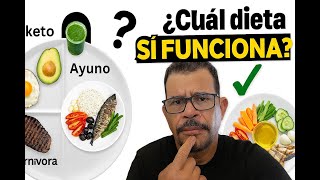
This video explains which diets truly work for fat loss, analyzing popular options like keto, intermittent fasting, paleo, detox, and carnivore diets, supported by scientific evidence. It also explores common myths and…
@jayber__crow @horizontalescal @growing_daniel Why is obesity correlated with poverty? Why don’t gastrin (saity hormone) mimics work like glps do? Why do fecal transplants between non-obese and obese patients cause weight loss? Why do calories needed to lose the same weight differ between obese and non?https://t.co/YE40F6CRNk
² Leibel RL, Rosenbaum M, Hirsch J (1995). Changes in energy expenditure resulting from altered body weight. New England Journal of Medicine, 332:621-628.
@GoldenGummo @random09871234 https://t.co/VwPvsTjfCp
Pour l'étude,vous pouvez vous plonger dans celle-ci.
Si vous avez besoin d'un résumé n'hésitez pas
Evidence indicates that appetite increases 100kcal for every 1kg of weight loss and energy expenditure may drop 15% for a 10% decrease in body weight. So what does this look like in practice! Increasing #satiety has to be the answer
https://t.co/pTVSXJzo35
https://t.co/pUQYTzXuMT https://t.co/8gmbZ75o8F
Aug 29, 2023 · 1 like · 1,256 followersView post →
HF
Harmless Frog
@FrogHarmless · X
@DrNadolsky Probably because we don't care to measure it. Who puts starving Africans or Indians in metabolic chambers to assess them for deviation from expected metabolic parameters?
OTOH, we *do* have published experiments of this sort.
https://t.co/uUNHi1KbH7 https://t.co/awjJJRotbu
 HF
 HD
 NV
 S番
 M
 K