The posts reflect a balanced interest in the research, with some acknowledging the practical implications for training, such as mentions of muscle activation differences like 'gluteus maximus activation' and 'muscle effort' without overhyping, which demonstrates nuanced engagement. Words like 'interesting findings' and 'worth considering' suggest moderate curiosity and acknowledgment of significance without assuming major revolution.
AgreementModerate agreement
Most discussions acknowledge the study’s findings, especially regarding differences in muscle activation between squat types.
InterestModerate interest
Posts show moderate interest, with some referencing how the research could influence training routines.
EngagementModerate engagement
Comments involve implying how the study’s details relate to practical training or coaching decisions, indicating some level of engagement.
ImpactNeutral impact
The discussions hint at relevance to training optimization but without strong claims about groundbreaking change.
Abstract in brief
The study examined how different squat depths (partial vs. full) affect muscle activation during the squat, using a group of 15 trained young men.
During partial squats, muscle activity was significantly higher for key muscles like the gluteus maximus, biceps femoris, and soleus compared to full squats.
No significant difference was found in perceived exertion between the two squat variations, indicating that while activation levels change, the effort felt by the participants is similar.
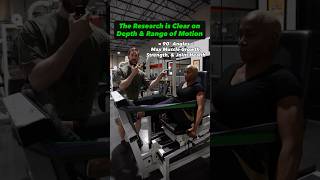
Research confirms that partial squats at 90 degrees are optimal for muscle growth, strength, and joint health. The video discusses biomechanics, power output, and training recommendations based on scientific studies and…
Research shows that training at 90 degrees knee flexion maximizes muscle growth while minimizing joint stress. Going beyond this angle offers no additional hypertrophy and may affect long-term strength and recovery.
Research shows training at 90 degrees knee flexion is optimal for muscle growth and joint health. Going beyond this range does not enhance hypertrophy and may hinder strength and stability, impacting long-term progress.
Squat truths explained through science show that partial squats at 90 degree joint angles are superior for muscle growth, strength, and joint health, especially for non-competitive athletes. Deep squats up to 100…
 JS
JS