Discussions highlight key aspects of the research, such as the role of the cell cycle in resistance and the importance of reproducibility, with phrases like 'building on previous research' and 'improved reproducibility' showing a forward-looking tone. Examples like the mention of early S phase cells' ability to resist treatment and the inclusion of RRIDs reflect both technical interest and appreciation for scientific rigor, illustrating a thoughtful engagement with the study's findings.
AgreementModerate agreement
Most discussions acknowledge the significance of discovering a non-genetic resistance mechanism, supporting the article's conclusions.
InterestModerate interest
Participants show curiosity about specific details like cell cycle phases and RRIDs, indicating moderate interest.
EngagementModerate engagement
Posts mention implications for research reproducibility and mechanisms involving cell cycle stages, reflecting active engagement.
ImpactModerate impact
The focus on advancing understanding of drug resistance and improving therapeutic strategies suggests perceived substantial impact.
Abstract in brief
Researchers found a new way lung adenocarcinoma cells resist the chemotherapy drug cisplatin without genetic changes, relying instead on the cell cycle stage during treatment.
Cells in early S phase can better recover and keep dividing after treatment because they experience less DNA damage, whereas cells in G1 or late S phase, especially when treated with certain inhibitors, show more damage and stop dividing.
This discovery suggests that the timing of cell cycle stages influences drug resistance, highlighting a nongenetic mechanism that could be targeted to improve cancer therapies.
Building on previous research, Rajal et al. uncover a mechanism for the resistance to platinum chemotherapy in lung cancer (lung adenocarcinoma) that depends on the cell cycle and not genetics https://t.co/JcoAZcwuCq https://t.co/DDZsbxucMB
Aug 10, 2021 · 18 likes · 3 shares · 171,662 followersView post →
EJ
eLife - the journal
@eLife · X
Building on previous research, Rajal et al. uncover a mechanism for the resistance to platinum chemotherapy in lung cancer (lung adenocarcinoma) that depends on the cell cycle and not genetics https://t.co/JcoAZcwuCq https://t.co/gbKYhwz4FD
Aug 18, 2021 · 14 likes · 1 share · 171,662 followersView post →
N
NatureRevClinOncol
@NatRevClinOncol · X
Lung adenocarcinoma cells in early S phase have a greater ability to maintain proliferative capacity during cisplatin treatment, which correlated with reduced DNA damage over multiple generations: https://t.co/KYRXLnDn7w #LCSM
May 21, 2021 · 5 likes · 1 share · 41,523 followersView post →
Aק
Alexis Lomakin, Ph.D. (אל) אַלעקסיס לאָמאַקין
@Alexis_Lomakin · X
RT @eLife: Building on previous research, Rajal et al. uncover a mechanism for the resistance to platinum chemotherapy in lung cancer (lung…
Aug 10, 2021 · 3 shares · 3,646 followersView post →
SH
Susan Heavey
@susan_heavey · X
RT @eLife: Building on previous research, Rajal et al. uncover a mechanism for the resistance to platinum chemotherapy in lung cancer (lung…
Aug 11, 2021 · 3 shares · 2,809 followersView post →
QB
Química y Biología
@apuntesquimica · X
RT @eLife: Building on previous research, Rajal et al. uncover a mechanism for the resistance to platinum chemotherapy in lung cancer (lung…
Aug 18, 2021 · 1 share · 1,021 followersView post →
This supplement discusses a non-genetic mechanism where lung adenocarcinoma cells resist cisplatin based on their cell cycle stage, with early S phase cells recovering better post-treatment by experiencing less DNA…
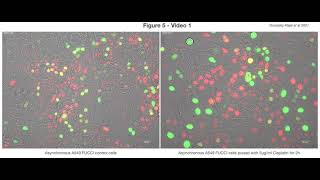
This video explores how lung adenocarcinoma cells develop resistance to cisplatin through a non-genetic, cell cycle-dependent mechanism. Cells in early S phase recover better after treatment, pointing to new targets to…
This video discusses a newly identified non-genetic mechanism by which lung adenocarcinoma cells resist cisplatin chemotherapy, emphasizing the role of cell cycle stages in drug response. The findings highlight…
Researchers identified a non-genetic mechanism of cisplatin resistance in lung adenocarcinoma, based on the cell cycle stage during treatment. Cells in early S phase are more resistant, highlighting potential strategies…
RT @eLife: Building on previous research, Rajal et al. uncover a mechanism for the resistance to platinum chemotherapy in lung cancer (lung…
Aug 18, 2021 · 1 share · 1,021 followersView post →
EJ
eLife - the journal
@eLife · X
Building on previous research, Rajal et al. uncover a mechanism for the resistance to platinum chemotherapy in lung cancer (lung adenocarcinoma) that depends on the cell cycle and not genetics https://t.co/JcoAZcwuCq https://t.co/gbKYhwz4FD
Aug 18, 2021 · 14 likes · 1 share · 171,662 followersView post →
SH
Susan Heavey
@susan_heavey · X
RT @eLife: Building on previous research, Rajal et al. uncover a mechanism for the resistance to platinum chemotherapy in lung cancer (lung…
Aug 11, 2021 · 3 shares · 2,809 followersView post →
Aק
Alexis Lomakin, Ph.D. (אל) אַלעקסיס לאָמאַקין
@Alexis_Lomakin · X
RT @eLife: Building on previous research, Rajal et al. uncover a mechanism for the resistance to platinum chemotherapy in lung cancer (lung…
Aug 10, 2021 · 3 shares · 3,646 followersView post →
EJ
eLife - the journal
@eLife · X
Building on previous research, Rajal et al. uncover a mechanism for the resistance to platinum chemotherapy in lung cancer (lung adenocarcinoma) that depends on the cell cycle and not genetics https://t.co/JcoAZcwuCq https://t.co/DDZsbxucMB
Aug 10, 2021 · 18 likes · 3 shares · 171,662 followersView post →
RR
RRID Robot
@RobotRrid · X
The authors of "A non-genetic, cell cycle-dependent mechanism of p…" (https://t.co/hAaEIbahg2) included RRIDs in their paper! RRIDs like this improve reproducibility in scientific research. #accelerateopenscience #methodsmatter
RRIDs were included in the eLife paper "A non-genetic, cell cycle-dependent mechanism of p…" (https://t.co/hAaEIbahg2). We appreciate the author's support of reproducibility. #STMpublishing #RRID
Lung adenocarcinoma cells in early S phase have a greater ability to maintain proliferative capacity during cisplatin treatment, which correlated with reduced DNA damage over multiple generations: https://t.co/KYRXLnDn7w #LCSM
May 21, 2021 · 5 likes · 1 share · 41,523 followersView post →
PO
Paperbirds_Oncology
@PaperbirdsO · X
New article: A non-genetic, cell cycle dependent mechanism of platinum resistance in lung adenocarcinoma https://t.co/wRYsb3Qiws #lungcancer #oncology https://t.co/yBap1otPu9